Activations
Robot Sketch Artists for Events: How a Live Drawing Activation Works
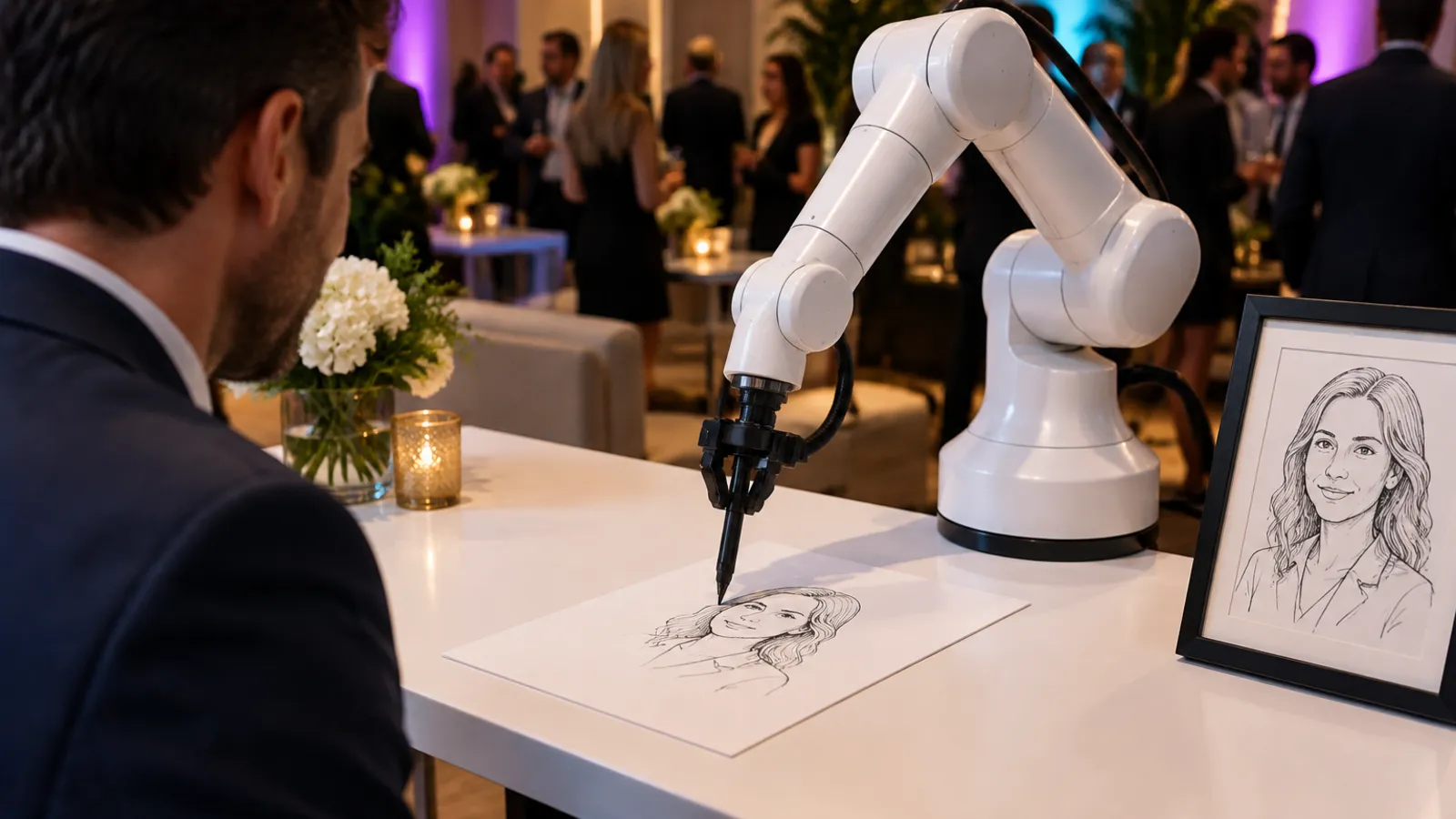
Robot sketch artists sound like a gimmick until you watch one work. A robotic arm picks up a pen and draws a real portrait of the person in front of it, line by line, on paper. Guests lean in, phones come out and people who never planned to stop at your booth end up waiting for their turn.
We run robot sketch artists through our Sketch Lounge activation. This guide explains how the experience works, what guests take home and what you need to plan for at your event.
What a robot sketch artist actually does
The process starts with a quick photo of the guest. Software turns the photo into a line drawing, and the robot arm draws that portrait with a pen on paper. Each drawing takes about 2 to 3 minutes, and guests watch the whole thing happen in front of them. Because it is a physical pen on real card stock, every portrait is a little different, and it feels closer to a caricature artist than a printer.
When the drawing is done, our attendant signs and hands over the finished piece. The card stock can carry your event logo, a sponsor mark or a short message, so the keepsake carries your brand back to every desk it lands on.
Why live drawing works so well at corporate events
Most photo experiences are over in seconds. A live drawing takes a couple of minutes, and that is a feature. It creates a natural audience around the station, because watching the robot draw is entertaining on its own. At a trade show, that small crowd signals to people walking by that something worth seeing is happening at your booth.
The time also gives your team a built-in moment to talk. While a guest waits for their portrait, a sales rep can introduce themselves, ask a question and scan a badge without it feeling like a pitch. At an executive reception or client appreciation event, the portrait becomes a conversation piece rather than a sales tool.
The guest experience, step by step
- The guest steps up and our attendant takes a quick photo.
- The robot arm begins drawing the portrait with pen on branded card stock.
- The guest watches the drawing come together in about 2 to 3 minutes.
- Our attendant signs the portrait and hands it to the guest as a keepsake.
Planning for throughput
Because each portrait takes a few minutes, a single robot arm serves a steady stream of guests rather than a rush. For high-traffic shows or receptions with a short window, we can bring two robot arms to roughly double the number of portraits drawn per hour. If you expect a large crowd, tell us your attendance and event hours and we will recommend one or two arms.
Some clients use a simple sign-up sheet or a text-when-ready list so guests can keep walking the floor and return for their portrait. Others prefer a visible line because it draws attention. Both work, and the right choice depends on your goal.
Branding the experience
The most visible branding is on the card stock itself. We design it in your colors and logo, and you approve it before the event. You can also add signage around the station and branded sleeves or envelopes so the portrait travels well. For sponsored activations, the sponsor's logo can sit on the card next to your event mark.
Space, power and setup
A Sketch Lounge station needs a compact footprint for the robot, a table, and room for guests to stand and watch. It runs on standard power. We handle delivery, setup and teardown, and one RTW attendant runs the station during your event. Share your venue or booth layout early, especially for trade shows with strict move-in windows, and we will plan around it.
Lighting matters too. The quick photo at the start shapes the drawing, so we place the station where faces are evenly lit and avoid harsh backlight from windows or bright LED walls. If your booth has a strong lighting design, tell us before the event and we will plan the capture position around it.
Where robot sketch artists fit best
- Trade show booths that need to stand out on a crowded floor
- Executive receptions and VIP lounges
- Client appreciation events and customer dinners
- Brand activations and product launches
- Holiday parties where people want a keepsake that is not another photo strip
Pairing it with other experiences
Robot sketch artists pair well with faster experiences. Some clients add a Trading Card Booth or a photo booth for guests who want something instant, while the Sketch Lounge handles VIPs or scheduled sessions. You can compare every option on our activations page or in the printable activations lookbook.
If you have never booked a live drawing activation before, the most common surprise is how long guests stay nearby after their own portrait is done. People like watching the next drawing, comparing styles and showing their portrait to colleagues. Leave a little open space around the station so that crowd does not block your booth or the aisle.
Frequently asked questions
How long does each robot sketch take?+
Each portrait takes about 2 to 3 minutes to draw, and guests watch it happen.
Can the portraits be branded?+
Yes. We design the card stock with your event or sponsor branding and you approve it before the event.
How many guests can a Sketch Lounge serve?+
A single robot arm serves a steady flow of guests across your event hours. For higher throughput we can bring two robot arms.
Who runs the robot during the event?+
One RTW attendant runs the station, handles guest flow and hands out the finished portraits.